MedIntegrity WGT-1200 Manufacturer & Supplier
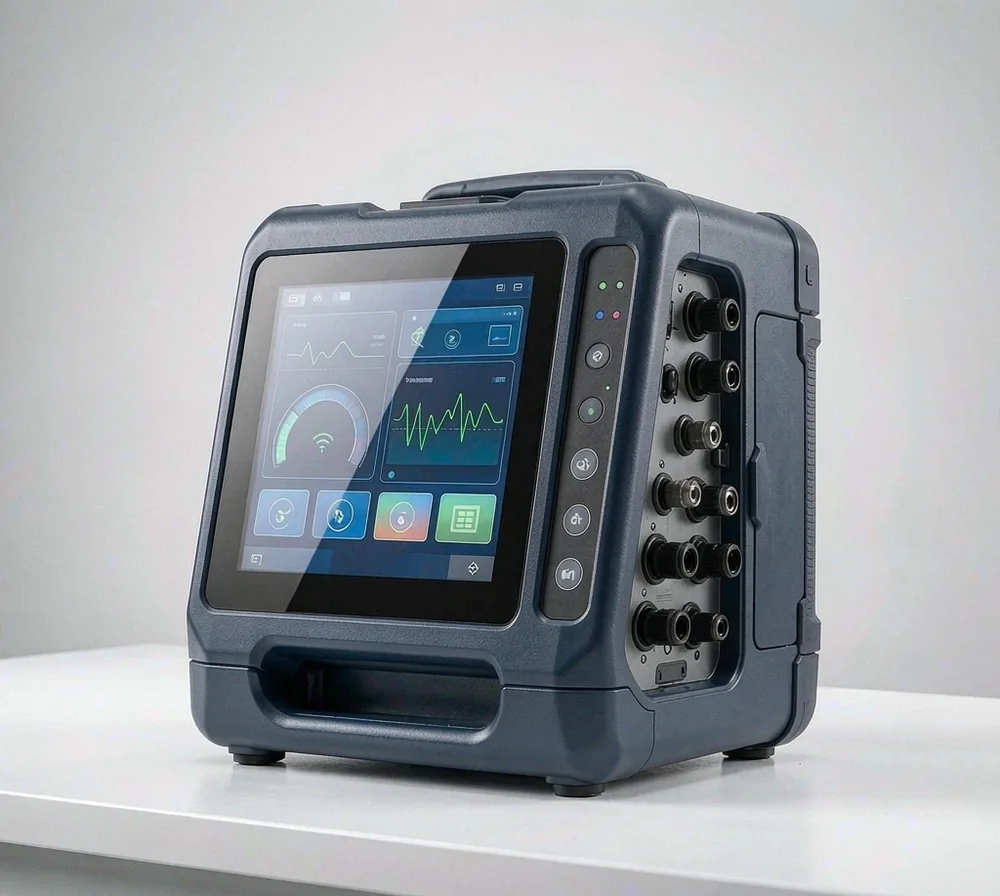
WGT-1200 Glove Integrity Tester
Overview
Designed and manufactured by MedIntegrity LLC — the glove integrity tester is built in our own factory, part of a 28-patent product line in pharmaceutical testing equipment.
MedIntegrity Glove Integrity Testing TechnologyWireless is better for Isolator & RABSMedIntegrity ·USANote:Please so kindly understand that the information and specification in this catalogue are subject to change for improvement without notice. If necessary,or any technical question,please contact your MedIntegrity representative. MedIntegrity Ensuring the Integrity of Isolator & RABS SystemBarrier systems such as isolators or RABs play a fundamental role in the protection of people and products in pharmaceutical production. Only tenths of a millimetre thick, gloves are the most crucial interface in these hermetically sealed units. To ensure that barrier systems are sterile and processes remain safe, a thorough and regular inspection of glove integrity is vital. The regulatory requirements for gloves are strict. What are the Regulations/Guidance for Glove Integrity Testing As specifically stated in the EU GMP Annex 1 revision, a glove integrity test is fundamental for the correct pre- and post-production qualification in an aseptic process during which external contamination can affect the correct product quality standard. Since the glove is the most probable source of contamination, it must be checked before and after production in order to guarantee correct production to verify if contamination occurred during production and during each critical phase of the production process,ensuring compatibly with its Quality Risk management and therefore to guarantee the correct production quality standard.
Technical Specifications
| Test Time | 3-6min |
|---|---|
| Minimum Hole Diameter | 100μm |
| Model | WGT-1200Measurement Method is Pressure Decay |
| Weight | 4.6 Kg (Net) / 1 unit |
| Primary Power | DC12V 20W |
| Storage Temperature | 5~50℃Storage Humidity is 25~90% |
| Electronic Testing Record | Yes |
| Minimum Hole Diameter | φ100 µm |
| History Records | ≥5 years capacity |
| Seal Pressure | ≤200 kPa |
| Battery | Rechargeable 12V lithium-ion battery |
Specifications subject to change for improvement without notice. For the latest data sheet or technical questions, contact your MedIntegrity representative.
In practice, the WGT-1200 runs pressure-decay glove checks without a tether, and the record keeps itself for five years or more. That's the setup our aseptic-line customers use for routine inspection — no sampling, no paper trail to chase.
Technical Documentation
Notes From Our Technical Documentation
Regulations & Guidance for Glove Integrity Testing
What are the Regulations/Guidance for Glove Integrity Testing 3.1 EU GMP Sterile Annex 1 As specifically stated in the EU GMP Annex 1 revision, a glove integrity test is fundamental for the correct pre- and post-production qualification in an aseptic process during which external contamination can affect the correct product quality standard. Since the glove is the most probable source of contamination, it must be checked before and after production in order to guarantee correct production to verify if contamination occurred during production and during each critical phase of the production process,ensuring compatibly with its Quality Risk management and therefore to guarantee the correct production quality standard. 3.2 FDA Aseptic Processing Guidance Maintenance of isolator systems differs in some significant respects from the traditional, non-isolated aseptic processing operations. Although no isolator forms an absolute seal,very high integrity can be achieved in a well-designed unit. However, a leak in certain components of the system can constitute a significant breach of integrity.The integrity of gloves, half-suits, and seams should receive daily attention and be addressed by a comprehensive preventative maintenance program . Replacement frequencies should be established in written procedures that ensure parts will be changed before they breakdown or degrade. Transfer systems, gaskets, and seals are among the other parts that should be covered by the maintenance program. 3.3 PIC/S ISOLATORS USED FOR ASEPTIC PROCESSING AND STERILITY TESTING 9.5.3 A program to minimize the risk of loss of integrity of gloves, sleeves and suits should be present. This should include operator practices, vigilance and the absence of sharp edges. There should also be an all encompassing preventative maintenance program that includes specification of examination and preemptive replacements.
Technical Guide
The glove is the interface your barrier system trusts
In an isolator or RAB, the glove is the only part of the barrier that a person touches directly. It is tenths of a millimetre thick, it flexes on every transfer, and the EU GMP Annex 1 revision names it explicitly as the most probable source of contamination in the aseptic process. The requirement follows directly: check it before production, after production, and at each critical phase, in line with your quality risk management.
FDA's aseptic processing guidance adds the maintenance angle. The integrity of gloves, half-suits and seams should receive daily attention under a comprehensive preventative maintenance program, with replacement frequencies established in written procedures so parts are changed before they break down or degrade. PIC/S guidance for isolators goes the same direction: an all-encompassing program covering examination and preemptive replacement.
A 100 µm answer in under six minutes
The test is pressure decay: the glove is pressurized at the port to a seal pressure of up to 200 kPa, the loop closes, and the instrument watches the pressure. An intact glove holds. A hole as small as 100 µm produces a measurable decay, and the result is a quantitative reading — not a yes/no impression — that you can compare against last week's glove or last quarter's baseline.
One check takes 3 to 6 minutes, which is nothing in a campaign measured in hours. Every run lands in the electronic testing record with operator and time, so the pre- and post-production checks required by Annex 1 are provable from the instrument rather than from a signature on a log sheet.
Battery, weight, and the reality of the cleanroom
The WGT-1200 carries a rechargeable 12 V lithium-ion battery and draws DC 12 V / 20 W. That is the difference between an instrument that lives at one port and one that moves between suites: no fixed power point, no cable through the barrier, and the test happens wherever the glove is.
At 4.6 kg net, it is light enough for a technician to carry between isolators during a maintenance round. Storage is rated from 5 to 50 °C at 25–90% relative humidity, which covers the storage cabinet in the corridor as well as the staging area of the suite.
Records stay with the instrument: history of five years or more, an audit trail of the same depth, and quick audit retrieval by time. For reference, BeiGene USA operates 20 WGT-1200 units in daily operation — a deployment pattern built on exactly this: one instrument, one documented routine, repeatable run after run.
A deployment you can plan around
The WGT-1200 is built to move. A rechargeable 12 V lithium-ion battery and a 4.6 kg net weight mean the same instrument can work one isolator in the morning and a different suite in the afternoon, without a fixed power point and without a cable crossing the containment boundary. For a site that runs several barrier systems, that is the difference between a portfolio of dedicated instruments and a small set that covers the whole floor on a documented routine.
That is the pattern behind the deployments: one instrument, one documented test, repeatable run after run. BeiGene USA runs 20 WGT-1200 units in daily operation, and the storage rating of 5 to 50 °C at 25–90% relative humidity means the unit is at home in the corridor cabinet between rounds as well as at the port. The result is a glove integrity program that scales with the number of ports on the line, not with the number of instruments bought.
Frequently Asked Questions
What is the smallest hole it can detect?
A 100 µm hole (φ100 µm) by the pressure decay method, per the specification.
How is it powered?
A rechargeable 12 V lithium-ion battery; consumption is DC 12 V / 20 W. No fixed power point and no cable through the barrier.
How long does one test take?
3 to 6 minutes per the specification, at a seal pressure of up to 200 kPa.
Where does the data go?
The electronic testing record on the instrument: history of five years or more and an audit trail of five years or more, with quick retrieval by time.
How often should the glove be tested?
Per EU GMP Annex 1: before and after production and during each critical phase, consistent with quality risk management — and on the preventative maintenance schedule your written procedures define.
What leak sizes can it detect?
Leaks down to 100 µm, by the pressure-decay method — suitable for routine aseptic-line glove inspection.
How long are electronic records retained?
Electronic records are kept for ≥5 years, supporting trend review and audit trails.
Where is the WGT series deployed?
In isolators, RABS and glove boxes. For reference, WGT-1200 units are in daily operation at BeiGene USA.
Need a quote or technical advice?
Tell us your application — our U.S. team responds with product selection, documentation and pricing.
Request a Quote