MedIntegrity BGT-120 Manufacturer & Supplier
Bag Integrity Tester BGT-120
Overview
Designed and manufactured by MedIntegrity LLC — the bag integrity tester is built in our own factory, part of a 28-patent product line in pharmaceutical testing equipment.
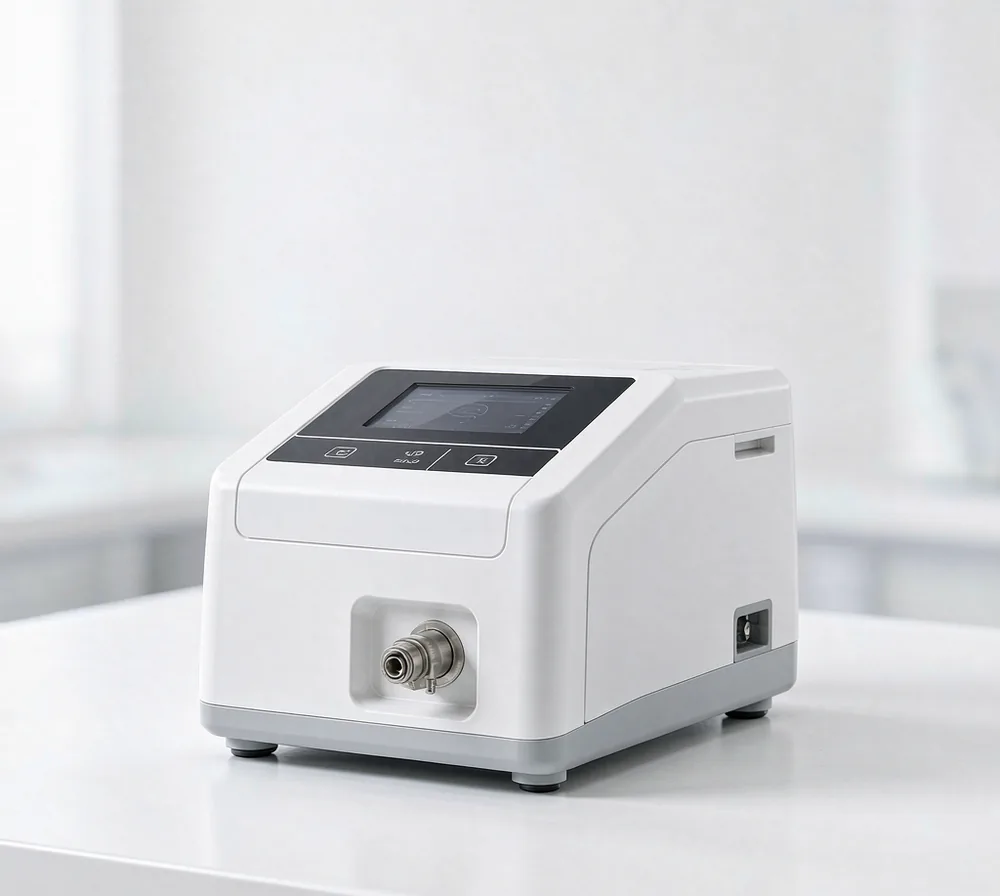
Largely operator independent More sensitive The advantages of the MedIntegrity BGT-120 Bag Integrity Systems extend the level of quality assurance that is offered to the end user. Although stringent standards such as raw material inspections, in-process pressure decay testing, sealing validations, and packaging and shipping procedures are maintained for all products, there is potential for damage after the product leaves the facility, specifically during handling and placement. At the critical stage of fluid filling, the MedIntegrity BGT-120 Bag Integrity Systems offers a higher level of confidence to biopharmaceutical manufacturers by helping to ensure that their product will enter a viable BPC. MedIntegrity BGT-120 System are versatile non-destructive single-use bag inspection systems designed for pharmaceutical. MedIntegrity BGT-120 inspection system provide a definitive PASS or FAIL as well as quantitative data that correlates to a leak rate. The BGT-120 System provide unparalleled sensitivity, reliability and practicality in testing. Our BGT-120 Testing system use pressure decay method and MedIntegrity wireless technology to deliver highly accurate results. With the ability to detect leaks of just a few microns, these systems produce quantitative results for long-term trend analysis and data traceability.
Technical Specifications
Full specification sheet available on request — contact us.
Specifications subject to change for improvement without notice. For the latest data sheet or technical questions, contact your MedIntegrity representative.
In practice, the BGT-120 uses pressure decay to find leaks in fluid bags and pouches and keeps electronic records for both manufacturing and QC use. Send us your bag format and we'll confirm the fit.
Technical Documentation
Notes From Our Technical Documentation
Practical Applications
Largely operator independent More sensitive Customization The advantages of the MedIntegrity BGT-120 Bag Integrity Systems extend the level of quality assurance that is offered to the end user. Although stringent standards such as raw material inspections, in-process pressure decay testing, sealing validations, and packaging and shipping procedures are maintained for all products, there is potential for damage after the product leaves the facility, specifically during handling and placement. At the critical stage of fluid filling, the MedIntegrity BGT-120 Bag Integrity Systems offers a higher level of confidence to biopharmaceutical manufacturers by helping to ensure that their product will enter a viable BPC.
Benefits
5.1 Accurate Result Our BGT-120 Testing system use pressure decay method and MedIntegrity wireless technology to deliver highly accurate results. With the ability to detect leaks of just a few microns, these systems produce quantitative results for long-term trend analysis and data traceability. 5.2 Non-Destructive Testing
Technical Guide
The problem the BGT-120 solves
A single-use bag that passed inspection at the manufacturer's plant can still be damaged after it leaves the facility — in handling, in placement, in the last steps before product goes into it. The bag's own manufacturing record does not cover that window, and for a biopharmaceutical manufacturer the risk sits right at the critical stage of fluid filling: a bag with a missed defect carries product into a bioprocess container (BPC) that was supposed to be sterile.
The MedIntegrity BGT-120 bag integrity system is designed for exactly that stage. It is a versatile, non-destructive single-use bag inspection system for pharmaceutical use, and it gives you a definitive pass or fail for each bag, along with quantitative data that correlates to a leak rate. The pass/fail is the decision you need at the fill; the quantitative reading is the data you need for the record.
Pressure decay, wireless, and the operator question
The test uses the pressure decay method with MedIntegrity's wireless technology: the bag is connected, the loop is closed, the pressure is set, and the instrument watches the decay. The wireless connection keeps the setup clean at the fill point — no tether running from the instrument to the bag through the area where you are about to introduce product.
The system is largely operator independent. That is a design goal, not a feature list: the same result from the morning shift and the night shift, from a trained operator and a new one, because the instrument does the measurement and the operator does the connection. Sensitivity is tuned so that leaks of just a few microns are detected, and the quantitative results are produced for long-term trend analysis and data traceability.
What the record gives you
Each inspection produces two things: the decision (pass or fail, definitive) and the data (a quantitative reading that correlates to leak rate). The decision is what lets the fill proceed or stop. The data is what lets you trend a bag lot, investigate a supplier change, or answer the auditor's question about what happened to the bags that carried campaign X.
The system is non-destructive: the bag is not damaged by the test itself. A bag that fails can be isolated and investigated; a bag that passes can go to fill. And because the results are quantitative and electronic, the program you run on the BGT-120 is a documented, auditable routine rather than a set of impressions — which is what the regulatory expectation for bag integrity actually requires at the fill stage.
The window the BGT-120 covers
A single-use bag that left the manufacturer's plant passing inspection can still be damaged after it leaves — in handling, in placement, in the last steps before product goes into it. The bag's own manufacturing record does not cover that window. For a biopharmaceutical manufacturer the risk sits at exactly the critical stage of fluid filling: a bag with a missed defect carries product into a bioprocess container that was supposed to be sterile. The BGT-120 exists to close that window with a measurable check before the fill, not after.
The system is largely operator independent by design, which matters more than it sounds at the fill point. The same result from the morning shift and the night shift, from a trained operator and a new one, because the instrument performs the measurement and the operator performs the connection. Sensitivity is tuned so that leaks of just a few microns are detected, and the wireless connection keeps a tether out of the area where sterility is being established for the product.
Two outputs, two jobs
Every inspection on the BGT-120 produces two things, and they do different jobs. The decision — a definitive pass or fail — is what lets the fill proceed or stop. The data — a quantitative reading that correlates to a leak rate — is what lets you trend a bag lot, investigate a supplier change, or answer the auditor's question about what happened to the bags that carried a given campaign. One is the control; the other is the evidence.
The test is non-destructive: the bag is not damaged by the test itself, so a bag that fails can be isolated and investigated rather than destroyed, and a bag that passes can go straight to fill. The record is electronic, with the operator and the time on every run, which is what makes the routine at the fill stage a documented, auditable practice rather than a set of impressions — the bar the regulatory expectation for bag integrity sets at that point in the process.
The bag as the bulk-fluid carrier of single-use
In a single-use system the bag is the bulk-fluid carrier of the entire bioprocess: it blends, stores, transfers and finally holds the product as it moves into the bag for the fill. Integrity at the fill is the last measurable check before that product enters a bioprocess container that was supposed to be sterile, which is why the BGT-120 sits at that transition rather than earlier — the supplier's record covers the factory, the BGT-120 covers the bag as it actually arrives and as it is about to carry product.
The non-destructive pass/fail is what makes that last check practical at the fill: a bag that passes goes straight in, a bag that fails is isolated with its quantitative reading, and the routine stays in the flow of the process instead of becoming a stop. That is the position a single-use program needs the bag inspection to be in.
Frequently Asked Questions
What is the BGT-120 for?
Non-destructive inspection of single-use bags at the critical stage of fluid filling — catching damage that occurred after the bag left the manufacturer, before product goes into the bag.
What does a test result look like?
A definitive pass or fail, plus quantitative data that correlates to a leak rate. The decision drives the fill; the data feeds the record and trend analysis.
How does the wireless connection help?
No tether from the instrument to the bag at the fill point — a cleaner setup at the exact stage where sterility is being established for the product.
How sensitive is it?
Leaks of just a few microns, per the specification, with quantitative results for long-term trend analysis and data traceability.
Does it depend on the operator?
Largely operator independent by design — the instrument performs the measurement, so the result is consistent across shifts and across operator experience.
Which method does the BGT-120 use?
Pressure-decay leak detection for fluid bags and pouches.
Is it suitable for both manufacturing and QC?
Yes — the BGT family is used for pharmaceutical bag manufacturing and QC, with electronic records.
How do I choose among the BGT models?
Tell us your bag format and testing volume and we'll recommend the right model from the BGT family.
Need a quote or technical advice?
Tell us your application — our U.S. team responds with product selection, documentation and pricing.
Request a Quote